• Magazine
  • School
  • Speakers
  • Log In
  • Become an EF Member!

Everyday Feminism

Intersectional Feminism For Your Everyday Life

Check out our online school!
  • Fem 101
  • Privilege
  • Trans & GNC
  • Race
  • LGBTQIA
  • Class
  • Religion
  • Sex
  • Love
  • Body
  • Disability
  • Videos
  • Comics
Dear Beloved Reader, we're going to be real with you. We're asking you to join our membership program so we can become fully financially sustainable (and you get some cool perks too!) With plummeting ad rates across the media industry, we're at an urgent risk of shutting down. And we don't want you to face Trump and his kind without the unique resources we provide. If everyone reading this only gave $12, we could raise enough money for the entire year in just one day. For the price of a single lunch out, you can help save us. We're an independent feminist media site led entirely by people of color. If Everyday Feminism has been useful to you, please take one minute to keep us publishing the articles you've come to rely on us for. Thank you!
Click here to join!
everyday feminism

The Top 4 Myths About the Black Lives Matter Movement – Debunked

August 6, 2016 by Franchesca Ramsey and MTV Decoded

“So you’re saying only black lives matter? That’s racist.”

The Black Lives Movement against police brutality is essential. But several misconceptions about Black Lives Matter are still far too common – and there’s a good chance that you’ve heard these misconceptions or that you believe them yourself.

Here’s Franchesca Ramsey with an episode of MTV Decoded that shuts down the most common Black Lives Matter myths once and for all.

So if you’re worried about “black on black crime,” the safety of police officers, or about white victims of police violence, these facts will put it all in perspective.

You’ll also find out why these myths are actually disingenuous distractions from the necessary movement for black lives – which means it’s time to stop repeating them, once and for all.

With Love,
The Editors at Everyday Feminism


Click for the Transcript

If you’ve ever heard someone say, but what about “black-on-black crime?” we’ve got you covered.

Scrolling through your Facebook feed, you’ll probably see articles and arguments about Black Lives Matter. A lot of people are mad or just confused about this movement, so here are responses to four questions you might hear when talking about Black Lives Matter.

“Oh so you care about black lives? Then why aren’t you talking about black-on-black crime?”

First off, this assumes that the black community isn’t worried about gun violence, which isn’t true. For example, Cease Fire in Chicago is an organization that actually intervenes in local street and gang fights. There’s even a documentary about them called The Interrupters.

#BlackLivesMatter isn’t just about the loss of life, which is always terrible; it’s about the lack of consequences when black lives are taken at the hands of the police. When a civilian has committed a violent crime, they’re generally arrested, tried, and convicted. Conversely, there’s a lot of evidence that it’s very rare to secure an indictment against a police officer for excessive force, and an indictment is just a trial. It’s not even a conviction.

Also, “black-on-black crime” isn’t a thing. 84% of white murder victims were killed by another white person, but we don’t call it “white-on-white crime.” That’s because our communities are still very segregated, so if you have the misfortune of being the victim of a crime, the perpetrator will most likely look like you.

So why do people always bring up “black-on-black crime”? Because it’s a diversion. They’re trying to prove black citizens don’t have the right to be outraged about police violence because their communities have a crime problem. But the truth is, black people are not more violent or more likely to commit crimes than anyone else.

The reality is, because of a history of institutional racism, black communities have higher poverty rates, suffer from poorly funded schools, and are more likely to be targeted by police.

“So are you saying blue lives don’t matter?”

Of course the lives of cops matter. That’s why if you kill a police officer, you are rightly arrested and prosecuted. But saying “blue lives matter” effectively lumps a profession into the same category as a marginalized group of people. Becoming a police officer is an occupation, it’s a choice, it’s not something you’re born into. And most importantly, advocating for citizens is not anti-cop. The job of police officers is to protect and serve all communities. If that’s not happening, we need to reassess and find a solution.

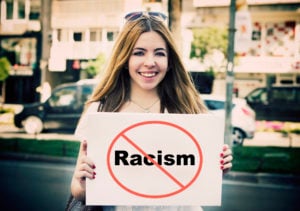
“So you’re saying only black lives matter? That’s racist.”

We’ve talked about this before, but this movement is not saying black lives matter more than anyone else’s. It’s saying, black lives should matter, but the way that our justice system, our media, and our police have been operating suggest that they do not. It’s totally okay for a movement to focus on issues specific to one marginalized groups.

Gay bars aren’t unfair to straight people. A breast-cancer walk isn’t unfair to other forms of cancer. And “save the rain forest” isn’t saying you hate all other trees.

To quote one law professor’s letter, “The subtext of #BlackLivesMatter is, because of the brutalizing and killing of black people at the hands of police, and the indifference of society in general and the criminal justice system in particular, it is important that we say: #BlackLivesMatter.”

“But what about the white victims of police violence, there’s way more of them?”

Yes, there are more white people killed by police officers than black people, but when you look proportionately within the populations, black Americans are 2.5 times as likely as white Americans to be shot and killed by police officers.

Black men make up just 6% of the nation’s population, but of all the unarmed people shot and killed by police in 2015, 40% of them were black men. Those numbers are tragic.

If an unarmed citizen is killed by the police, or an armed citizen is killed under suspicious circumstances, people should be upset no matter what the victim’s race. This isn’t a competition.

Sadly, police violence is a problem in many communities, but bringing up other victims to discredit the #BlackLivesMatter movement is pretty disingenuous.

If you really believe that police violence is a problem, you should support #BlackLivesMatter as well as other organizations fighting for victims and their families.

I know these conversations are hard, but they’re necessary if we want to move forward. Thanks for watching, and we’ll see you next time right here on Decoded.


 

To learn more about this topic, check out:

  • What White People Say About About Black Lives Matter (And What You Really Mean)
  • Here’s What You’re Missing When You Object to the Black Lives Matter Protests

Share
Tweet
760 Shares

Franchesca “Chescaleigh” Ramsey is a graphic designer and video blogger based out of New York City. With over 100k subscribers on her two YouTube channels, Chescaleigh and Chescalocs she and her videos have been featured on numerous style and entertainment blogs and news publications including MTV, The New York Times, Essence.com, and The BBC. In addition to making YouTube videos, she’s the writer-at-large for Upworthy.com and host of the MTV News webseries “Decoded”. Follow her on Twitter @chescaleigh.

Share
Tweet
760 Shares
Found this article helpful?
Help us keep publishing more like it by becoming a member!
#SaveEF

Filed Under: Posts, Videos Tagged With: Race & Ethnicity, Violence

What's Hot Right Now

  • A person sits at a computer with a speech bubble that reads "Let me explain this once and for all." What’s Wrong with Cultural Appropriation? These 9 Answers Reveal Its Harm
  • A person in bed with their eyes closed What Everyone Needs to Know, But Is Afraid to Ask About Fat Sex
  • An image of Kylie Jenner taking a selfie with cornrows. An arrow points to her head saying "nope." 7 Reasons Why White People Should Not Wear Black Hairstyles
  • Equality Is Not Enough: What the Classroom Has Taught Me About Justice

About Franchesca Ramsey

About MTV Decoded

Follow us!

Search for Articles

Advertisements

Most Popular This Month

  • A person sits at a computer with a speech bubble that reads "Let me explain this once and for all." What’s Wrong with Cultural Appropriation? These 9 Answers Reveal Its Harm
  • A person in bed with their eyes closed What Everyone Needs to Know, But Is Afraid to Ask About Fat Sex
  • An image of Kylie Jenner taking a selfie with cornrows. An arrow points to her head saying "nope." 7 Reasons Why White People Should Not Wear Black Hairstyles
  • A stack of colorful notes are stacked on top of one another. The note on the top of the stack has a question mark on it. 3 Differences Between the Terms ‘Gay’ and ‘Queer’ — and Why It Matters

Advertisements

Most Popular This Week

  • A person sits at a computer with a speech bubble that reads "Let me explain this once and for all." What’s Wrong with Cultural Appropriation? These 9 Answers Reveal Its Harm
  • A person in bed with their eyes closed What Everyone Needs to Know, But Is Afraid to Ask About Fat Sex
  • An image of Kylie Jenner taking a selfie with cornrows. An arrow points to her head saying "nope." 7 Reasons Why White People Should Not Wear Black Hairstyles
ABOUT
Our Vision
About Everyday Feminism
Comments Policy
GET INVOLVED
Become an EF Member
Donate to EF
Join the Team
Cross-post Our Articles
Book a Speaker
STAY CONNECTED
Contact Us
Like Our Facebook Page
Follow Us On Instagram
Follow Us On Twitter

Copyright © 2018 · Everyday Feminism · Privacy Policy · Comments Policy